On the 12th of August, Jersey will have a very exciting astronomical event – a solar eclipse! We will be one of the best places in the British Isles to watch as the moon almost completely covers the sun – with a predicted 94% totality.
If you’re as excited as we are to witness this once (or twice) in a lifetime event, you might also be wondering how you can best protect your eyes against damage.
Looking directly at the sun can cause serious damage to your eyes, also known as Solar Retinopathy, so it’s incredibly important to take care when viewing a solar eclipse.
The retina lacks pain receptors, which means you likely won’t feel any damage happening in the moment, and damage can occur without awareness or pain.
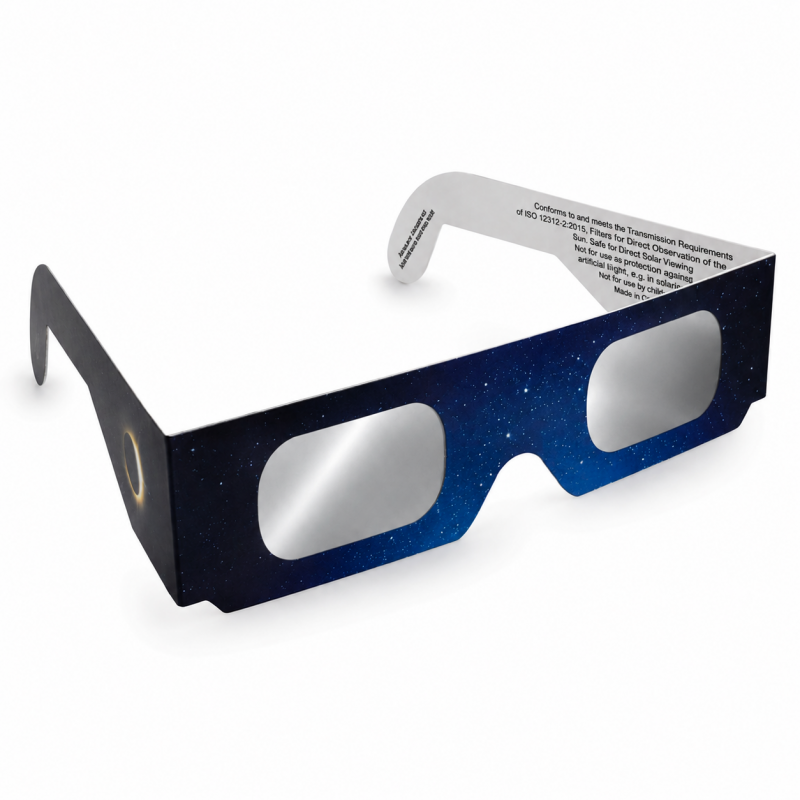
When watching an eclipse, special ‘solar eclipse viewing glasses’, or a handheld solar viewer must be used, these are especially designed for direct viewing of the sun by filtering visible, ultraviolet and infrared light.
Eclipse Viewing Glasses are not like regular sunglasses – regular sunglasses are unable to filter out eye-damaging radiation, and they are not safe for viewing the sun or a solar eclipse.
If your eclipse glasses are torn, scratched or damaged, it is strongly recommended to discard of them and replace them.
Don’t forget to look out for counterfeit eclipse glasses!
Unfortunately, there are fake Eclipse Viewing Glasses out there. These are unsafe and unauthorised, failing to block infrared, ultraviolet and strong light which could cause severe eye injury. In the UK, Solar Eclipse Glasses must comply with a the international safety standard ISO 12312-2. It’s important to ensure your Eclipse Glasses are genuine with specially designed filters.
We can’t wait to safely experience this solar eclipse!
If you’re unable to source a pair of solar eclipse glasses, creating a pinhole projector like the ones in the videos below is a fun and safe alternative or viewing an eclipse.
Lorem ipsum dolor sit amet, consectetur adipiscing elit. Ut elit tellus, luctus nec ullamcorper mattis, pulvinar dapibus leo.